
 By Gaveta de Notícias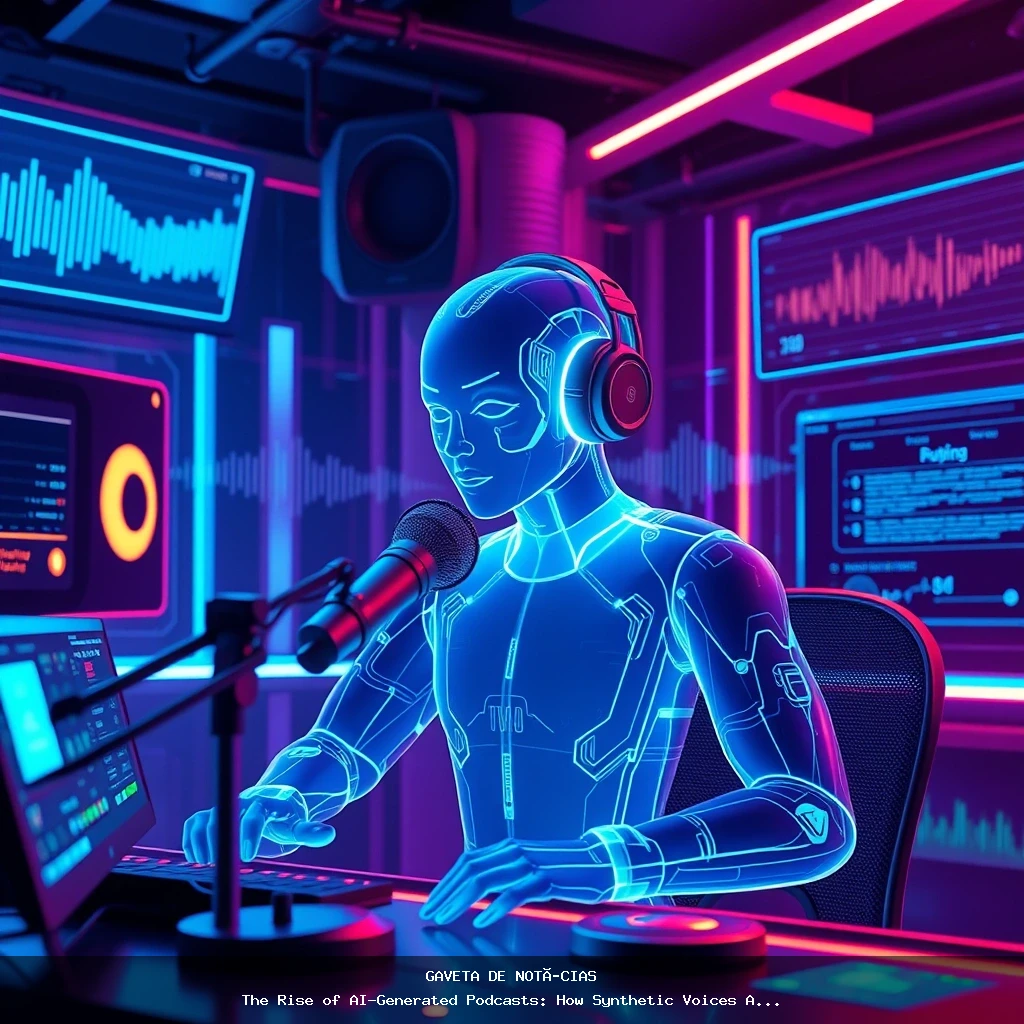
The New Voice in Your Ear: AI Podcasts on the Rise
In the ever-evolving world of digital media, podcasts have become a staple for millions of listeners worldwide. But a new trend is emerging that could redefine the medium: AI-generated podcasts. Leading the charge is Spotify, which has invested heavily in AI technology to create synthetic voices that sound remarkably human. These AI hosts can deliver personalized news briefings, narrate audiobooks, and even engage in dynamic conversations, all without the need for a human presenter.
One of the most notable developments came in March 2026, when Google unveiled its new podcast generator, PodGen, which uses advanced language models to produce entire episodes from a simple text prompt. Similarly, Apple has been experimenting with AI to enhance its podcast platform, offering automated transcription and translation services that could break down language barriers.
However, the rise of AI podcasts is not without controversy. The recent Writers Guild of America strike highlighted concerns about AI replacing human creativity. Many podcast hosts and writers fear that AI could undermine the authenticity and emotional connection that human presenters bring. Despite these worries, a survey by Edison Research found that 62% of podcast listeners are open to listening to AI-generated content, especially if it means more diverse and accessible programming.
Innovative startups like DeepWave Audio and Vocali are pushing boundaries, creating AI hosts that can adapt to listener preferences in real-time. For instance, Vocali recently launched a daily news podcast where the AI host interviews real experts, blending synthetic voices with live recordings. This hybrid approach could be the future, offering the efficiency of AI with the credibility of human insight.
As we look ahead, industry experts predict that by 2030, AI-generated podcasts could account for a third of all podcast content. The potential for personalization is immense, with each listener potentially receiving a unique version of their favorite show. Yet, as with any technological leap, the key will be to harness AI’s power without losing the intimate, human experience that makes podcasts so special.